Weeks-long prank campaign
The CallerThe Weeks-long prank campaign is a series of deceptive announcements and frightening telephone calls attributed to Johnny Beskow. By using familiar channels of communication to unsettle people at a distance, it converts mischief into a community-wide loss of security: the calls leave no clear physical trail, yet their effects prompt people to question the trust and procedures on which ordinary life depends.
Origins and Pattern
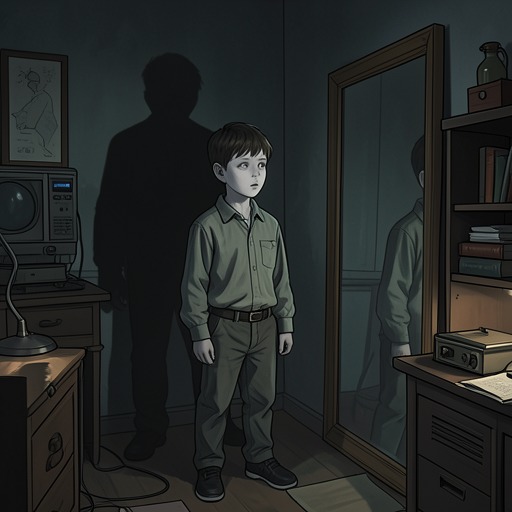
Johnny’s conduct emerges against a background of neglect and conflict at home. He regards Johnny’s mother with intense hostility, and she tells him that she cannot support him indefinitely and that he needs to find work. The evidence connects this difficult home life with his sense of isolation, but does not make it an excuse for the campaign or establish that it alone caused his actions.
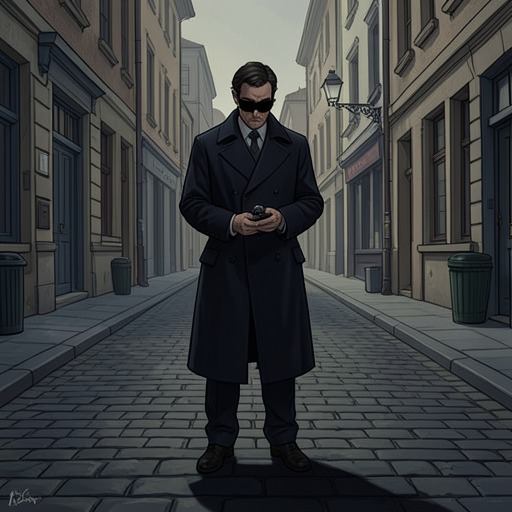
The campaign’s methods are deceptive rather than openly confrontational. A caller presents a polite voice that Memento Funeral Home’s Arnesen has no reason to distrust, showing how the scheme takes advantage of routine social confidence. The false announcements and calls create alarm without leaving fingerprints or other obvious clues, making the campaign both psychologically disruptive and difficult to investigate.
Public Consequences and Investigation
The false funeral pickup targeting Helge Landmark gives the campaign particular weight. Helge is dying, and the attempted deception brings the prospect of death into his home before it arrives; the public is especially struck by this intrusion. Although Helge refuses to speak to newspapers, people learn of his condition, and the incident becomes a subject of widespread discussion.
The episode also raises questions beyond the immediate deception. Residents wonder whether a telephone call alone can frighten and humiliate someone so thoroughly, while the case prompts consideration of whether procedures concerning death should change. The campaign exposes how institutions rely on trust: a plausible, courteous caller can exploit established routines, even when those routines have no reason to anticipate a hoax.
The difficulty of identifying the caller compounds that unease. The person sought—described publicly as a man or a boy—has terrorized people from a distance and left no fingerprints or clues. Fear and shock, rather than physical evidence, are what remain readily visible to the community.
Cessation and Aftermath
The false announcements and frightening calls eventually cease, but their stopping does not immediately resolve the uncertainty they created. The question of how to catch the caller remains pressing precisely because the campaign has produced so little evidence. Its aftermath therefore includes both public alarm and a practical challenge for the investigation.
Johnny is a minor and cannot be held in custody; instead, he must report to the police station three times a week. He is consistently on time and goes to Konrad Sejer’s office after checking in, where they talk over mineral water. Johnny admits that frightening people had been fun and describes the conduct as a game, saying that he wanted to stir things up and did not mean to hurt anyone. His account clarifies how he understood the campaign, but does not undo the fear or humiliation it caused.
The campaign’s central contrast is between Johnny’s private framing of the acts as play and the public consequences of using death-related announcements and trusted telephone procedures to frighten others. The calls stop; the questions they leave behind concern not only how the prankster could be caught, but how much ordinary security depends on the assumption that people are telling the truth.